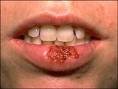
Showing posts with label Get Rid of Cold Sores. Show all posts

Cold Sores and Children-Why SoreCold Can Help


The first episode of cold sores can be so painful that your child may have difficulty eating, drinking, and sleeping. A child who has a fever and many mouth sores may need to be encouraged to drink water and other fluids to prevent dehydration.
Adults and older children who have a painful first episode of cold sores may sometimes need a prescription-strength medicated mouth rinse to reduce pain.
Several complementary treatments are available if you wish to try an alternative way to ease your symptoms.
Vitamin C, lysine supplements, and lemon balm are examples of complementary treatments that may provide some relief during a cold sore outbreak. SoreCold is a proprietary cold sore / herpes formula that we have researched and developed for many years. This formula contains the highest quality medical grade blends of essential oils that are known to stop the herpes virus from causing a cold sore. Users of our product tell us that these blended oils are highly effective in stopping the Cold Sore / Herpes virus. These cold sore and herpes formulas are so effective with the herpes / cold sore virus that we bet our business on it and offer you a 100% money back guarantee on the purchase price of the product if you are not completely satisfied.
One study showed that zinc oxide/glycine topical cream reduced the duration of an outbreak.


These measures may help prevent the spread of cold sores in children:
Encourage frequent hand-washing.
Do not let children share toys that other children put in their mouths.
Clean toys occasionally with a disinfectant.
If children have open or weeping cold sore blisters, keep them home until the blisters begin to scab over.
Do not let children kiss each other while they have cold sores or uncontrollable drooling.
Use gloves to apply medicated ointment to a child's cold sores.

Natural Remedies for Cold Sore Outbreaks


Cold sores home remedies are wise alternatives to effectively relieve and soothe cold sores and blisters. Anyone suffering from the discomfort caused by cold sores should be aware that there are natural methods to treat them. Home remedies offer cost-effective and all-natural way to manage cold sores. Ice is one of the cheapest cold sores home remedies. Application can be done instantly because all you have to do is to gently rub the ice along the affected area. Do this for a few minutes and repeat every hour to achieve its soothing action. A great option is a topical remedy that contains the highest quality medical grade blends of essential oils that are known to stop the herpes virus from causing a cold sore. It is called SoreCold. Users of our product tell us that these blended oils are highly effective in stopping the Cold Sore / Herpes virus. These cold sore and herpes formulas are so effective with the herpes / cold sore virus that we bet our business on it and offer you a 100% money back guarantee on the purchase price of the product if you are not completely satisfied. Nature seems to provide cures that man can only dream of creating. Our Research and Development team has worked for many years to isolate a successful remedy to the Cold Sore / Herpes condition. Finally, after trying countless Cold Sore and Herpes formulas we came upon some very specific essential ols that showed surprising promise in controling Herpes and Cold Sore outbreaks. In the mid 1990's we found several oils which when blended together created a formula that our clients have told us not only stop their Cold Sore and Herpes virus from doing it's dirty work of creating large ugly blisters but also have the amazing properties of speeding tissue healing at rates that you have to see to believe! One of the popular and widely-known cold sores home remedies is tea bag. The tea bag is firmly pressed over the cold sores for 30 minutes. Another way to do this is to apply the tea bag directly on the affected area with a slow, rubbing motion. The same steps should be repeated every hour to maximize its healing benefits.Plain powdered salt can also be used to treat cold sores. Using a damp forefinger, apply salt directly over the blisters. Make sure to cover the whole affected area. Gently rub and spread the salt over the blistered area. With the same finger, press on the cold sores and hold for 30 seconds. Application of Aloe gel or gentle skin lubricants after rubbing the salt is strongly recommended to achieve optimum treatment. Lemon balm is a mainstay of cold sores home remedies. Lemon juice is known for its healing properties. It effectively increases the rate at which cold sores can heal. Directly apply lemon extract over the affected part of the skin. Doing this can also disinfect the blistered skin. Proper diet is one of the most effective cold sores home remedies. Discipline should be practiced to maximize the benefits you can get from eating right in order to treat cold sores. Foods that are rich in vitamins are good choices. Cut down on salt, caffeine, processed meat and dairy, foods rich in acid content and the ones that are rich in arginine such as whole wheat. Chocolate bars, nuts and seeds are likewise not recommended. However, they should be replaced with complex carbohydrates, fruits and vegetables. Sanitation and disinfection are of high importance to avoid contaminants from worsening your skin condition. Cleanliness is essential to treat and manage cold sores. Keeping your hands, skin and the areas of your home clean and free from bacteria can guarantee the effectiveness of the cold sores home remedies that you are practicing. These natural methods of treating cold sores are considered effective when done properly and hygienically.

A Cure for Cold Sores?


By Kathleen Kingsbury
Cold sores are icky. And they're insidious. The raw, ugly blisters show up without notice and are unpreventable. Worse yet, once you're infected with the virus that causes them, you're stuck with it for good. But landmark research reported today by microbiologists at Duke University may offer the potential for a cure.
By age 40, nearly 90% of adults have been exposed to the herpes simplex virus-1 (HSV-1), which causes cold sores. People are usually infected as children, but many never have symptoms. For those who do, however, cold sores are a painful and permanent nuisance, always erupting in the same location, at the original site of infection on the lips or mouth. Once HSV-1 enters the body it hunkers down for life, most of the time hiding dormant in the cranial nerves near the spine. The virus can be triggered by outside stress, such as exposure to sunlight, a fever or emotional distress.But the mystery has been how to eliminate the virus while it's hiding, before it produces unsightly symptoms.

Until now, research has generally concentrated on keeping HSV1 inactive — and preventing cold sores from ever showing up. But the Duke researchers took the opposite tack: figuring out precisely how to switch the virus from latency to its active stage. That's important, says lead author Dr. Bryan Cullen, professor of molecular genetics and microbiology at Duke, "because unless you activate the virus, you can't kill it."

Cullen and his team were able to replicate the intricate process using lab mice. They started by identifying the tiniest components of the HSV-1 strain. In its latent stage, HSV-1 produces a single molecular product, called latency-associated transcript RNA, or LAT RNA. Unlike most messenger RNA, LAT RNA doesn't produce proteins, so scientists have never been able to determine LAT RNA's exact function. But by inserting the LAT RNA into mice, Cullen found that it breaks down into even smaller strands called microRNA. Researchers then discovered that it was the microRNA that blocked production of the protein that activates HSV-1. "So if there was a sufficient supply of microRNA, then the virus stayed latent," Cullen says. "But under a high level of stress, the microRNA's blocking mechanisms break down, thus triggering a cold sore." The study, funded by the National Institutes of Health, will be published in the journal Nature this week.

Understanding how to override the microRNA could allow scientists to activate the virus and then kill it using acyclovir. "Once the virus sticks its head up over the fence, you whack it off for good," Cullen says. "Yes, the person has to have one last cold sore, but it'd be worth it to most people to cure them forever."

The theory is that by activating the virus, then preventing it from returning to hibernation, which is when researchers think it gains strength, it can be completely eradicated. Cullen believes that a drug could be developed to block the microRNA that suppress HSV-1 into latency; once it's active, acyclovir can be used to destroy the virus permanently. Cullen suggests that this new research may also eventually be applied to other latent viruses, such as herpes simplex virus-2 (HSV-2), which causes genital herpes, or the chicken pox virus, which causes shingles in adults. Cullen warns that some patients, especially those suffering genital herpes, may have to take acyclovir on a regular basis (HSV-2 is a hardier virus), but for people with HSV-1, the virus could be eradicated with just one dose.

Cullen and his colleagues, as well as several biotech firms, are already investigating such treatments and how best to deliver them. "Are any of these viruses fatal?" Cullen says. "No. But there are a lot of people who'd be thrilled never to have a cold sore again." Try SoreCold today.

Katie Price aka Jordan gets Cold Sores


According to NOW online - Peter Andre, Jordan’s husband doesn’t kiss her when she has cold sores and admits that she gets them when she is working hard and feeling run down.
I wonder what Jordan takes in order to get through her cold sore spell. That’s probably a good idea not to kiss her on the mouth directly but I have to wonder if Peter Andre already has type-1 Herpes in his system and doesn’t know it. After all, it’s not really included in proper STD testing now, is it..
Isn’t she a gorgeous woman? Her husband is handsome but not as good looking as she is. I was reading on that site that I found that she’s talking about getting boob job #5. I don’t think she needs to get any more boob jobs, do you? I think the twins look find just how they are and I’m sure Peter Andre would agree.

Does Tom Cruise Have Herpes?


Everyone is speculating wildly: The Post asks if Tom Cruise gave his wives cold sores. Tom Cruise's wife Katie Holmes has cold sores. His ex-wife Nicole Kidman had cold sores. "Cold sore" is a polite term for "oral herpes... transmitted very easily from one kisser to another.

Celebrity Flaw of the Day - Katie Holmes Cold Sore


Katie Holmes was starting to look very beautiful or a while there, but she's now starting to look like a very tall boy. But that's not what her flaw is; her flaw is that she has a case of herpes going on around her mouth. Ouch!I remember in 2005, Katie Holmes had a pretty nasty cold sore outbreak and this isn't nearly as bad, but it's pretty nasty nonetheless.Katie Holmes is probably happy about the outbreak because it means she doesn't have to kiss Tom Cruise for a while

Sore Cold XM


Sore Cold XM$19.99

In North America over 90% of us carry the Herpes virus which causes the Cold Sore. About 55 million of those who carry the virus suffer from regular outbreaks of the Cold Sore / Herpes virus. Those of you who have felt the dreaded tingle as your skin slowly begins to puff up know the frustration and embarrasment this can cause and the typical treatments for the cold sore / herpes virus have generally added to the insult because they rarely come close to correcting the problem.
At Sore Cold we have found an answer to this problem and you will love it. As our clients continually tell us you can finally stop the cold sore /herpes virus before it breaks out . If you don't catch it in time users of our product tell us that you can help it to heal in a remarkably short period of time generally a one to three day period as stated by the typical user.
We offer a proprietary cold sore / herpes formulas that we have researched and developed for many years. These formulas contain the highest quality medical grade blends of essential oils that are known to stop the herpes virus from causing a cold sore. Users of our product tell us that these blended oils are highly effective in stopping the Cold Sore / Herpes virus. These cold sore and herpes formulas are so effective with the herpes / cold sore virus that we bet our business on it and offer you a 100% money back guarantee on the purchase price of the product if you are not completely satisfied.
FREE SHIPPING ON ALL ORDERS! Shipping in a plain package for privacy. Express Delivery Available 1-2 Days 3-5 Day Delivery Free

What's a Cold Sore

What's a Cold Sore?
Cold sores, which are small and somewhat painful blisters that usually show up on or around a person's lips, are caused by the herpes simplex virus-1 (HSV-1). But they don't just show up on the lips. They can sometimes be inside the mouth, on the face, or even inside or on the nose. These places are the most common, but sores can appear anywhere on the body, including the genital area.
Genital herpes isn't typically caused by HSV-1; it's caused by another type of the herpes simplex virus called herpes simplex virus-2 (HSV-2) and is spread by sexual contact. But even though HSV-1 typically causes sores around the mouth and HSV-2 causes genital sores, these viruses can cause sores in either place.
What Causes a Cold Sore?
HSV-1 is very common — if you have it, chances are you picked it up when you were a kid. Most people who are infected with the herpes simplex virus got it during their preschool years, most likely from close contact with someone who has it or getting kissed by an adult with the virus.
Although a person who has HSV-1 doesn't always have sores, the virus stays in the body and there's no permanent cure.
When someone gets infected with HSV-1, the virus makes its way through the skin and into a group of nerve cells called a ganglion (pronounced: gang-glee-in). The virus moves in here, takes a long snooze, and every now and then decides to wake up and cause a cold sore. But not everyone who gets the herpes simplex virus develops cold sores. In some people, the virus stays dormant (asleep) permanently.
What causes the virus to "wake up" or reactivate? The truth is, no one knows for sure. A person doesn't necessarily have to have a cold to get a cold sore — they can be brought on by other infections, fever, stress, sunlight, cold weather, hormone changes in menstruation or pregnancy, tooth extractions, and certain foods and drugs. In a lot of people, the cause is unpredictable.
Here's how a cold sore develops:
The herpes simplex virus-1, which has been lying dormant in the body, reactivates or "wakes up."
The virus travels toward the area where the cold sore decides to show up (like a person's lip) via the nerve endings.
The area below the skin's surface, where the cold sore is going to appear, starts to tingle, itch, or burn.
A red bump appears in the area about a day or so after the tingling.
The bump blisters and turns into a cold sore.
After a few days, the cold sore dries up and a yellow crust appears in its place.
The scab-like yellow crust falls off and leaves behind a pinkish area where it once was.
The redness fades away as the body heals and sends the herpes simplex virus back to "sleep."
How Do Cold Sores Spread?
Cold sores are really contagious. If you have a cold sore, it's very easy to infect another person with HSV-1. The virus spreads through direct contact — through skin contact or contact with oral or genital secretions (like through kissing). Although the virus is most contagious when a sore is present, it can still be passed on even if you can't see a sore. HSV-1 can also be spread by sharing a cup or eating utensils with someone who has it.
In addition, if you or your partner gets cold sores on the mouth, the herpes simplex virus-1 can be transmitted during oral sex and cause herpes in the genital area.
Herpes simplex virus-1 also can spread if a person touches the cold sore and then touches a mucous membrane or an area of the skin with a cut on it. Mucous membranes are the moist, protective linings made of tissue that are found in certain areas of your body like your nose, eyes, mouth, and vagina. So it's best to not mess with a cold sore — don't pick, pinch, or squeeze it.
Actually, it's a good idea to not even touch active cold sores. If you do touch an active cold sore, don't touch other parts of your body. Be especially careful about touching your eyes — if it gets into the eyes, HSV-1 can cause a lot of damage. Wash your hands as soon as possible. In fact, if you have a cold sore or you're around someone with a cold sore, try to wash your hands frequently.
If they aren't taken care of properly, cold sores can develop into bacterial skin infections. And they can actually be dangerous for people whose immune systems are weakened (such as infants and people who have cancer or HIV/AIDS) as well as those with eczema. For people with any of these conditions, an infection triggered by a cold sore can actually be life threatening.
How Are Cold Sores Diagnosed and Treated?
Cold sores normally go away on their own within 7 to 10 days. And although no medications can make the infection go away, prescription drugs and creams are available that can shorten the length of the outbreak and make the cold sore less painful.
If you have a cold sore, it's important to see your doctor if:
you have another health condition that has weakened your immune system
the sores don't heal by themselves within 7 to 10 days
you get cold sores frequently
you have signs of a bacterial infection, such as fever, pus, or spreading redness
To make yourself more comfortable when you have cold sores, you can apply ice or anything cool to the area. You also can take an over-the-counter pain reliever, such as acetaminophen or ibuprofen.

Herpes Simplex

Herpes simplex
Herpes simplex Classification and external resources.
This article is about the disease. For information about the specific virus, see Herpes simplex virus.
"herpes" redirects here. For all types of herpes viruses, see Herpesviridae.
Herpes simplex is a viral disease caused by Herpes simplex viruses; both herpes simplex virus 1 (HSV-1) and herpes simplex virus 2 (HSV-2) cause herpes simplex. Infection with the herpes virus is categorized into one of several distinct disorders based on the site of infection. Oral herpes, the visible symptoms of which are colloquially called cold sores, infects the face andmouth. Oral herpes is the most common form of infection. Infection of the genitals, commonly known as herpes, is the second most common form of herpes. Other disorders such as herpetic whitlow, herpes gladiatorum, ocular herpes (keratitis), cerebral herpes infection encephalitis, Mollaret's meningitis, neonatal herpes, and possibly Bell's palsy are all caused by herpes simplex viruses.
Herpes viruses cycle between periods of active disease—presenting as blisters containing infectious virus particles—that last 2–21 days, followed by a remission period, during which the sores disappear. Genital herpes, however, is often asymptomatic, though viral shedding may still occur. After initial infection, the viruses move to sensory nerves, where they reside as life-long, latent viruses. Causes of recurrence are uncertain, though some potential triggers have been identified. Over time episodes of active disease reduce in frequency.
Herpes simplex is most easily transmitted by direct contact with a lesion or the body fluid of an infected individual. Transmission may also occur through skin-to-skin contact during periods of asymptomatic shedding. Barrier protection methods are the most reliable, but not failsafe, method of preventing transmission of herpes. Oral herpes is easily diagnosed if the patient presents with visible sores or ulcers. Early stages of orofacial herpes and genital herpes are harder to diagnose; laboratory testing is usually required. Prevalence of HSV infections varies throughout the world. Poor hygiene, overcrowding, lower socioeconomic status, and birth in an undeveloped country have been identified as risk factors associated with increased HSV-1 childhood infection. Additional studies have identified other risk factors for both types of HSV.
There is currently no cure for herpes; no vaccine is currently available to prevent or eliminate herpes. However, treatments are available to reduce viral reproduction and shedding, prevent the virus from entering the skin, and alleviate the severity of symptomatic episodes.

What are Cold Sores

What are cold sores?
Cold sores are a type of facial lesion that are found either on the lips or else on the skin in the area immediately adjacent to the mouth. Some equivalent terms that are used to refer to cold sores are "fever blisters" and the medical term "recurrent herpes labialis."
Specifically what causes cold sores?
Cold sores are caused by the herpes simplex virus. No doubt you've heard of "herpes" before, but don't jump ahead of yourself. There are actually two types of herpes simplex virus, "type 1" and "type 2."
Type 1 herpes simplex virus.
Herpes simplex virus type 1 ("HSV1") generally only infects those body tissues that lie "above the waistline" and it is HSV1 that causes cold sores in the majority of cases.
Type 2 herpes simplex virus.
Herpes simplex virus type 2 ("HSV2") usually only infects those body tissues that lie "below the waistline" and it is this virus that is also known as "genital herpes." Herpes simplex virus type 2 is not usually the virus that causes cold sores, although it can.
How do people get exposed to the herpes simplex virus that causes their cold sores?
When you think of having an infection you usually assume that you were recently exposed to the germ that has caused your problem. With cold sores this is not the case. Cold sores are not a sign of a recently acquired herpes simplex infection but instead a reactivation of herpes virus particles already living in your body. Cold sores occur when latent herpes simplex virus particles, which have been lying dormant ("asleep"), become reactivated.

Where does this dormant herpes simplex virus come from?
The dormant virus particles come from a previous herpes infection. A person's initial herpes simplex virus infection, termed "primary herpetic stomatitis," does not usually take the form of a cold sore and therefore a person may not relate their initial exposure to the herpes virus to the recurrent cold sores that they get.
What are the signs and symptoms of a person's initial herpes (HSV1) infection?
The signs and symptoms associated with a person's initial infection of the herpes simplex virus (termed "primary herpetic stomatitis") usually take the following form:
The first signs of the infection are characterized by nonspecific constitutional symptoms such as: fever, irritability, headache, and pain upon swallowing.
A day or so after the infection's initial signs have appeared the person's mouth becomes painful and their gums become intensely inflamed.
Usually by day three of the infection a number of tiny blisters have formed throughout the person's mouth.
These blisters soon rupture resulting in gray colored ulcers.
These ulcers can be very painful and often interfere with a person's ability to eat.
The ulcers will eventually heal. Usually the entire infection has run its course within 10 to 14 days.
Why don't the symptoms of primary herpetic stomatitis seem familiar to you?
If you don't remember having had the classic signs and symptoms of primary herpetic stomatitis it might be because you experienced them as a small child. Most cases occur before the age of 7.
In other cases, if you don't remember having all the classic signs and symptoms, it's probably because your case was subclinical. This is by far the most common occurrence. It has been estimated that 99% of all cases of primary herpetic stomatitis are subclinical, meaning that the course the infection ran was so slight that its symptoms were not apparent. It is quite possible that when you had the infection that, at most, you only experienced one or two mild mouth sores.

Cold Sore - Symptoms

Cold Sores - Symptoms

Cold sores are blisters on the lips and the edge of the mouth that are caused by an infection with the herpes simplex virus (HSV).
Cold sore blisters usually break open, weep clear fluid, and then crust over and disappear after a few days.
Other symptoms may include:
A sore mouth that makes eating, drinking, and sleeping uncomfortable. Cold sores can be painful.
A fever.
A sore throat.
Swollen lymph nodes in the neck.
Drooling, in small children.
You may not develop cold sores when you are first infected with HSV. If cold sores do develop when you are first infected, they may be more severe than in later outbreaks. During the first outbreak of cold sores, the blisters may spread to any part of the mouth.
After you become infected, HSV remains in your body and may cause cold sores to return throughout your lifetime (recurrent cold sores). Most people have 1 to 12 outbreaks a year but have fewer outbreaks as they get older.
Recurrent cold sores usually develop where facial skin and the lip meet. About 6 to 48 hours before a cold sore is visible, you may feel tingling, burning, itching, numbness, tenderness, or pain in the affected area. This is called the prodromal stage.
Some common triggers that cause cold sores to return include:
Sunlight exposure, especially on the lips.
Stress.
Fatigue.
Other infections, such as a cold or influenza.
Food allergies.
Dental treatment.
Injury to the lips or gums.
An impaired (weak) immune system, either because of medicines (such as corticosteroids) or because of an autoimmune disease.
Cosmetic surgery, such as dermabrasionor laser skin resurfacing.
Hormonal chages in women caused by the menstrual cycle.
Pregnancy.
People who have weakened immune systems are more likely than those with strong immune systems to have longer or more severe outbreaks of cold sores. HSV infection may be life-threatening in certain people with weak immune systems.
Who is at greatest risk for developing cold sores?
Anyone who is exposed to the herpes simplex virus (HSV) is at risk for developing cold sores. But many people may have the virus and may never develop cold sores.
People who have weakened immune systems are at an increased risk for having more severe and longer-lasting outbreaks of cold sores.
One form of HSV infection is seen most often in children 1 to 3 years old. This type of HSV infection (primary herpes stomatitis) can cause a high fever and blisters throughout the mouth, which can interfere with the ability to eat. It can be serious in children-they can get quite sick from this illness, although they usually recover without any long-term problems.

Cold Sores Topic Overiew

Cold Sores - Topic Overview
After you have been infected with the virus, there is no sure way to prevent more cold sores. But there are some things you can do to reduce your number of outbreaks and prevent spreading the virus.
Avoid the things that trigger your cold sores, such as stress and colds or the flu.
Always use lip balm and sunscreen on your face. Too much sunlight can cause cold sores to flare.
Avoid sharing towels, razors, silverware, toothbrushes, or other objects that a person with a cold sore may have used.
When you have a cold sore, make sure to wash your hands often, and try not to touch your sore. This can help keep you from spreading the virus to your eyes or genital area or to other people.
Talk to your doctor if you get cold sores often. You may be able to take prescription pills to prevent cold sore outbreaks.

Cold Sore - Topic Overview

Cold Sores - Topic Overview

What are cold sores?
Cold sores, sometimes called fever blisters, are groups of small blisters on the lip and around the mouth. The skin around the blisters is often red, swollen, and sore. The blisters may break open, leak a clear fluid, and then scab over after a few days. They usually heal after several days to 2 weeks.
See a picture of cold sores.
What causes cold sores?
Cold sores are caused by the herpes simplex virus (HSV). There are two types of herpes simplex virus: HSV-1 and HSV-2. Both virus types can cause lip and mouth sores and genital herpes.
The herpes simplex virus usually enters the body through a break in the skin around or inside the mouth. It is usually spread when a person touches a cold sore or touches infected fluid-such as from sharing eating utensils or razors, kissing an infected person, or touching that person's saliva. A parent who has a cold sore often spreads the infection to his or her child in this way. Cold sores can also be spread to other areas of the body.
What are the symptoms?
The first symptoms of cold sores may include pain around your mouth and on your lips, a fever, a sore throat, or swollen glands in your neck or other parts of the body. Small children sometimes drool before cold sores appear. After the blisters appear, the cold sores usually break open, leak a clear fluid, and then crust over and disappear after several days to 2 weeks. For some people, cold sores can be very painful.
Some people have the virus but don't get cold sores. They have no symptoms.
How are cold sores diagnosed?
Your doctor can tell if you have cold sores by asking you questions to find out whether you have come into contact with the virus and by examining you. You probably won't need any tests.
How are cold sores treated?
Cold sores will usually start to heal on their own within a few days. But if they cause pain or make you feel embarrassed, they can be treated. Treatment may include skin creams, ointments, or sometimes pills. Treatment may get rid of the cold sores only 1 to 2 days faster, but it can also help ease painful blisters or other uncomfortable symptoms.
The herpes simplex virus that causes cold sores cannot be cured. After you get infected, the virus stays in your body for the rest of your life. If you get cold sores often, treatment can reduce the number of cold sores you get and how severe they are.
How can you prevent cold sores?
There are some things you can do to keep from getting the herpes simplex virus.
Avoid coming into contact with infected body fluids, such as kissing an infected person.
Avoid sharing eating utensils, drinking cups, or other items that a person with a cold sore may have used.

Cold Sore Prevention

Prevention
You can take steps to guard against cold sores, to prevent spreading them to other parts of your body or to avoid passing them along to another person. Cold sore prevention involves the following:
Avoid kissing and skin contact with people while blisters are present. The virus can spread easily as long as there are moist secretions from your blisters. In persons with depressed immune systems, the virus can be spread even after the skin appears to be healed.
Avoid sharing items. Utensils, towels, lip balm and other items can spread the virus when blisters are present.
Keep your hands clean. Wash your hands carefully before touching another person when you have a cold sore.
Be careful about touching other parts of your body. Your eyes and genital area may be particularly susceptible to spread of the virus.
Avoid triggers. If possible try to avoid or prevent conditions that stress your body, such as getting a cold or the flu, not getting enough sleep or staying in the sun for long periods of time without applying sunblock.
Use sunblock. Apply sunblock to your lips and face before prolonged exposure to the sun — during both the winter and the summer — to help prevent cold sores.

Cold Sore Complications

Complications
Cold sores are contagious. They can pass from one person to another through skin-to-skin contact. The greatest risk of infection is from the time the blisters appear until they have completely dried and crusted over. There is a possibility of spreading the virus for some time even after the skin has healed.
If you have a cold sore, avoid close contact with infants, anyone who has eczema (atopic dermatitis) or people with a suppressed immune system, such as people with cancer, AIDS or an organ transplant. These people are at higher risk of more severe infection.
Herpes simplex infection of the eye causes scarring of the cornea and is a leading cause of blindness in the United States.

Cold Sore When to Seek Medical Advice

When to seek medical advice
Cold sores generally clear up on their own without treatment. However, see your doctor if:
You have a pre-existing health condition that has compromised your immune system
The cold sores don't heal within one to two weeks on their own
Symptoms are severe
You have frequent recurrences of cold sores
You experience irritation in your eyes

Cold Sore Causes

Causes
Certain strains of the herpes virus cause cold sores. Herpes simplex virus type 1 usually causes cold sores. Herpes simplex virus type 2 is usually responsible for genital herpes. However, either type of the virus can cause sores in the facial area or on the genitals. You get the first episode of herpes infection from another person who has an active lesion. Shared eating utensils, razors and towels may spread this infection.
Once you've had an episode of herpes infection, the virus lies dormant in the nerve cells in your skin and may emerge again as an active infection at or near the original site. You may experience an itch or heightened sensitivity at the site preceding each attack. Fever, menstruation, stress and exposure to the sun may trigger a recurrence.
Cold sores and canker soresCold sores are quite different from canker sores, which people sometimes associate with cold sores. Cold sores are caused by reactivation of the herpes simplex virus, and they're contagious. Canker sores, which aren't contagious, are ulcers that occur in the soft tissues inside your mouth, places where cold sores don't typically occur.

Cold Sore Symptoms

Cold sore symptoms include:
Small, painful, fluid-filled blisters on a raised, red area of your skin, typically around the mouth
Pain or tingling, called the prodrome, often precedes the blisters by one to two days
Usual duration of seven to 10 days
Cold sores most commonly appear on your lips. Occasionally, they occur on your nostrils, chin or fingers. And, although it's unusual, they may occur inside your mouth — more often on your gums or hard palate, which is the roof of your mouth. Sores appearing on other soft tissues inside your mouth, such as the inside of the cheek or the undersurface of the tongue, may be canker sores but aren't usually cold sores.
Signs and symptoms may not start for as long as 20 days after exposure to the herpes simplex virus, and usually last seven to 10 days. The blisters form, break and ooze. Then a yellow crust forms and finally sloughs off to uncover pinkish skin that heals without a scar.

Cold Sore Definition

Definition
The scenario is all too familiar: You feel a tingling on your lip and a small, hard spot that you can't yet see. Sure enough, in a day or two, red blisters appear on your lip. It's another cold sore, probably happening at a bad time, and there's no way to hide it or make it go away quickly.
Cold sores — also called fever blisters — are quite different from canker sores, a condition people sometimes associate with cold sores.
Cold sores are common. Though you can't cure or prevent cold sores, you can take steps to reduce their frequency and to limit the duration of an occurrence.

Exams and Tests

Exams and Tests
The diagnosis of cold sores is usually based on the appearance of the lesions. Usually, no laboratory test is needed because most sores that look like cold sores are cold sores. If there is a question about the diagnosis, a variety of tests are available, including viral culture and polymerase chain reaction(PCR). To do these tests, a swab is rubbed over an active blister. Swabbing the blister in an attempt to culture the virus in the lab only works in the first 24 to 48 hours before the blister has a crusted over. There is also a way to test for herpes DNA in a swab that has been rubbed on the sore. This type of testing is called a "polymerase chain reaction" or PCR for short. PCR testing is very good at detecting herpes virus, but it is not as readily available as culture.
Blood tests for antibodies are not very useful, because finding antibodies to herpes just means that the body has been exposed to this virus at some point in the past. It does not tell if the current sore is due to herpes.
If the diagnosis is in doubt, the best approach is to encourage the person to see a doctor at the first sign of a sore. That will allow the clinician to see active lesions that can be tested by culture or PCR.