
Canker sores (aphthous ulcers) are small shallow sores or ulcers that appear inside the lips, inside the cheeks, or on the gums. They begin as small, reddish swellings. Then they burst, and the rupture sores are covered with a white or yellow membrane. The edges of the sores are still red and look like a painful red halo. Without treatment, canker sores heal in two weeks or less.
Canker sores occur inside the mouth, usually inside the lips, cheeks, or soft palate. They can also occur on or under the tongue and in the throat. Often, several canker sores appear at the same time and may be in clusters. Canker sores appear as a whitish, round area with a red border. The sores are painful and sensitive to touch. The average canker sore is about 0.25 inch (0.6 cm) in size, although they can occasionally be larger. Canker sores are not infectious.
Anyone can get canker sores, but they are most common among teenagers and people in their twenties. Females are slightly more likely to get canker sores than males. Some people have one or two episodes a year; others have almost continual problems. Females are likely to have canker sores during their premenstrual period.
Anyone can get canker sores, but they are most common among teenagers and people in their twenties. Females are slightly more likely to get canker sores than males. Some people have one or two episodes a year; others have almost continual problems. Females are likely to have canker sores during their premenstrual period.
Approximately 20 percent of the U.S. population is affected by recurring canker sores. That means as of 2004 some 56 million Americans suffer annually from these small but painful ulcers. Fortunately, certain safe, natural remedies are effective in treating canker sores.
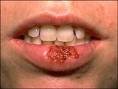
Canker sores are sometimes mistaken as cold sores (also known as fever blisters). Cold sores are caused by the herpes simplex virus. The sores caused by this disease, also known as oral herpes, can occur anywhere on the body. Most commonly, herpes infection occurs on the outside of lips and much less often inside the mouth. Cold sores are infectious. Both can be treated using the SoreCold remedy to quickly speed the healing process.
Canker sores are sometimes mistaken as cold sores (also known as fever blisters). Cold sores are caused by the herpes simplex virus. The sores caused by this disease, also known as oral herpes, can occur anywhere on the body. Most commonly, herpes infection occurs on the outside of lips and much less often inside the mouth. Cold sores are infectious. Both can be treated using the SoreCold remedy to quickly speed the healing process.




 Posts
Posts

